

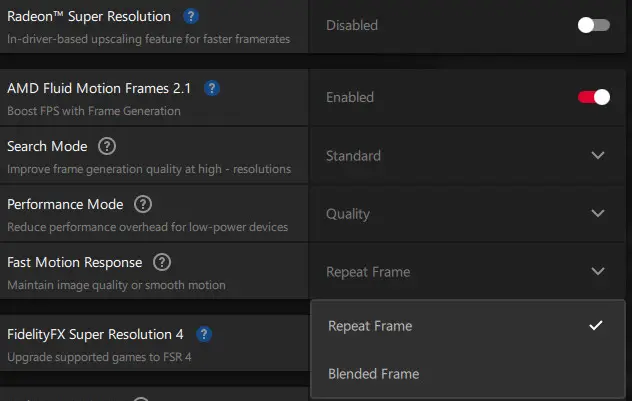
In a stealthy but significant move, AMD has introduced a new “Fast Motion Response” feature for AFMF 2 (AMD Fluid Motion Frames) in its latest PyTorch Preview Driver, quietly released in early October 2025. This enhancement targets one of the biggest challenges in frame generation: motion clarity during rapid camera movement, especially in fast-paced games like Call of Duty, F1 24, and Overwatch 2.
What Is “Fast Motion Response”?
AFMF 2 already uses AI-based frame interpolation to boost FPS by generating synthetic frames between real ones. However, in high-speed scenes, this can cause:
- Ghosting
- Motion blur artifacts
- Latency spikes
The new Fast Motion Response module dynamically adjusts interpolation timing and motion vectors based on scene velocity, reducing artifacts and improving clarity.
How It Works
- Scene Velocity Detection: The driver now tracks rapid motion and adjusts frame pacing in real time.
- Adaptive Interpolation: Instead of fixed frame generation intervals, AFMF 2 adapts to motion intensity.
- PyTorch Integration: The feature is built using AMD’s ROCm AI stack and leverages PyTorch for real-time inference, hinting at future ML-driven enhancements.
Early Results & Benchmarks
According to AFMF 2.0 Update – Fast Motion Response Tested, the feature reduces ghosting by up to 60% in Cyberpunk 2077 and improves perceived motion clarity in Forza Horizon 5. AMD Fluid Motion Frames 2.0 – PyTorch Driver Surprise shows smoother gameplay at 120 FPS with minimal latency increase. AFMF 2.0 Tested – Fast Motion Response vs DLSS FG compares AMD’s new feature to NVIDIA’s DLSS Frame Generation, showing competitive results in motion-heavy scenes.
Compatibility & Access
- Available in the PyTorch Preview Driver (October 2025)
- Works on RDNA 3 and RDNA 4 GPUs
- Expected to roll into Adrenalin 24.10.1 WHQL later this month
- Currently limited to DirectX 12 titles with AFMF support